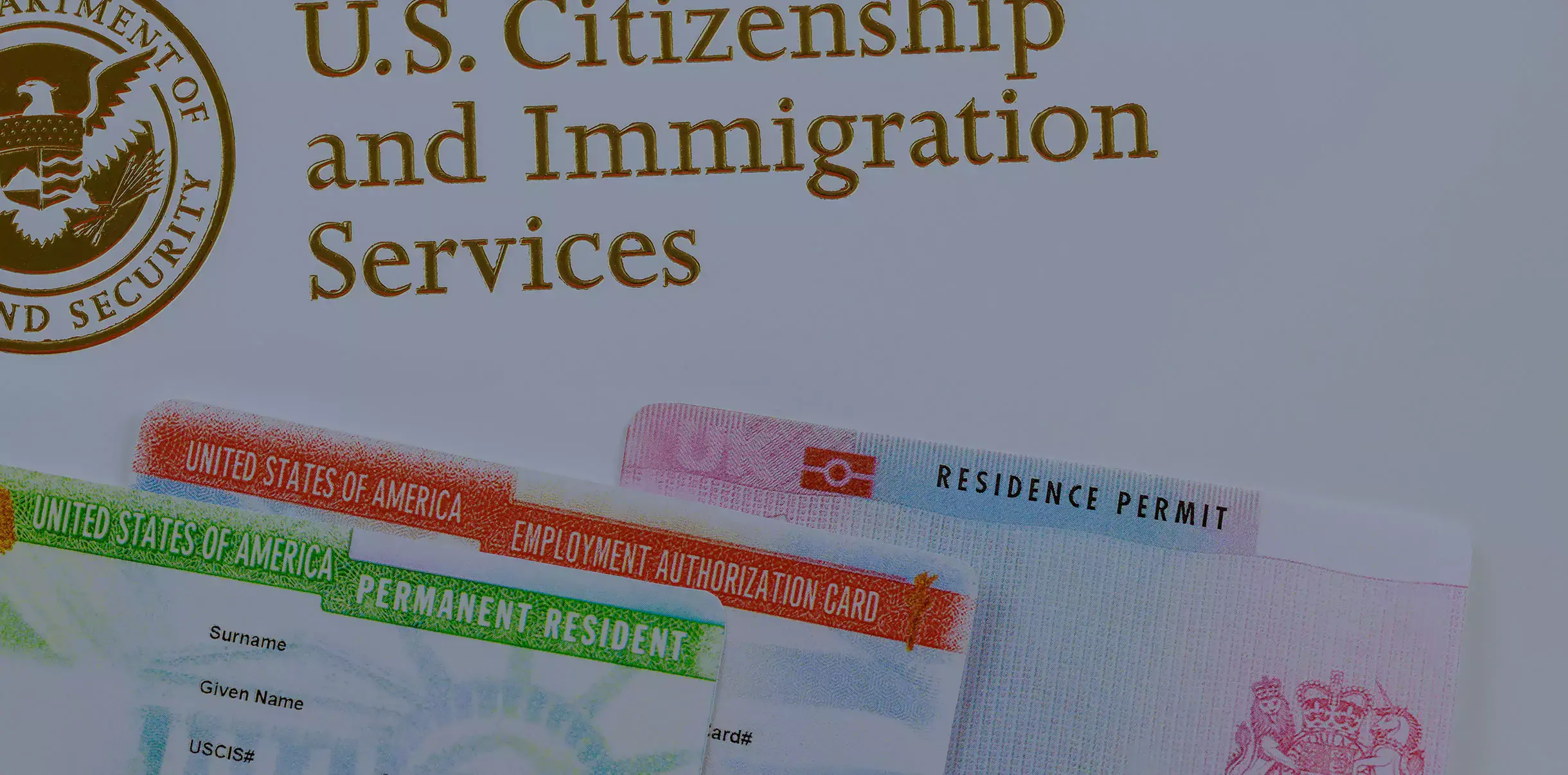
Naturalization Requirements for EB-5 Investors: What You Must Prove
The EB-5 citizenship requirements for naturalization are the same as for any other lawful permanent resident, with no special track and no additional barriers. From there, you must meet the eligibility criteria under INA §316, the general naturalization statute.
To qualify, you must be at least 18 years old, hold lawful permanent resident status, and meet requirements covering continuous residence, physical presence, English language proficiency, civics knowledge, and good moral character.
One planning risk that every EB-5 investor should be aware of is the I-829 timing trap. If you fail to file Form I-829 within the 90-day window before your conditional green card expires, you may be placed in removal proceedings. An experienced immigration attorney will track this deadline on your behalf, so a missed window does not jeopardize years of investment and planning.
Continuous residence and physical presence rules
You must maintain 5 years of continuous U.S. residence and be physically present for at least 30 months of that period, two distinct requirements satisfied independently. For EB-5 investors who travel internationally for business, the physical presence rule is the most common citizenship eligibility risk. Any absence exceeding 6 consecutive months creates a rebuttable presumption that continuous residence has been broken. An absence of 1 year or more resets the 5-year clock entirely. Planning travel schedules and obtaining re-entry permits with your immigration attorney protects your citizenship timeline.
The 3-year naturalization rule for spouses of U.S. citizens
EB-5 investors married to U.S. citizens may qualify for naturalization after only 3 years of permanent resident status instead of 5. This provision under INA §319(a) requires living in marital union with your citizen spouse continuously during those 3 years and meeting all other naturalization requirements. Your physical presence requirement also drops to 18 months of the 3-year period. This provision can meaningfully accelerate the citizenship timeline for eligible investors.
English, civics, and the Oath of Allegiance
Every naturalization applicant must read, write, and speak basic English and pass the USCIS civics test, a standardized set of 100 questions on American government and history. During your naturalization interview, the USCIS officer will ask 10 of those questions, and you must answer at least 6 correctly. English exemptions exist for certain age and residency combinations, such as applicants 50 or older with 20+ years of permanent residency. Good moral character throughout the statutory period is also required, and certain criminal convictions may be disqualifying. Upon N-400 approval, you attend the Oath of Allegiance ceremony, surrender your green card, and receive your Certificate of Naturalization.
Green Card vs. U.S. Citizenship: Why EB-5 Investors Go All the Way
Your USCIS-issued EB-5 green card lets you live, work, and study anywhere in the United States, own property, run businesses, and sponsor certain family members for green cards. U.S. citizenship adds permanent security, global mobility, and civic participation beyond what a green card provides.
The U.S. passport is one of the most powerful travel documents in the world, granting visa-free or visa-on-arrival access to over 180 countries. U.S. citizens cannot be deported from the country, regardless of criminal convictions, with only narrow exceptions. Citizenship itself is permanent and never expires, while green cards must be renewed every 10 years, and extended absences can put your resident status at risk.
Rights and protections that only U.S. citizens receive
U.S. citizenship gives you the right to vote in all elections, eligibility to hold federal office, and full State Department diplomatic protection abroad. Many federal government positions and security clearances are restricted to U.S. citizens, which means certain career opportunities only become available after naturalization. Citizens are also eligible for federal benefits unavailable to permanent residents and can serve on federal juries. These rights are permanent and cannot be revoked the way permanent resident status can.
Family sponsorship advantages for naturalized citizens
U.S. citizens can sponsor a broader range of family members than permanent residents. Immediate relative petitions for spouses, parents, and unmarried children under 21 are not subject to annual visa caps, with no waiting list or backlog. Citizens may also petition for married adult children and siblings, options unavailable to green card holders. Green card holders can only sponsor spouses and unmarried children, with per-country caps that create multi-year waits.
Children and EB-5 citizenship under the Child Citizenship Act
Minor children of naturalized EB-5 investors may automatically acquire U.S. citizenship without filing a separate N-400 application, under the Child Citizenship Act of 2000 (INA §320). This applies to children under 18 who are permanent residents residing in the U.S. in the citizen parent's custody. If you naturalize while your children are still minors and they meet these conditions, they become U.S. citizens automatically by operation of law. For EB-5 investors with young families, this means your children's citizenship requires no separate application, civics test, or filing fee.
What Happens to Your EB-5 Capital During the Citizenship Process?
A common concern among EB-5 investors is whether capital will be tied up for the entire citizenship timeline. Your EB-5 investment does not need to remain in the project until you become a U.S. citizen. The "at risk" requirement is satisfied once USCIS approves your I-829 petition, and from there capital return is governed by your project agreement, not immigration milestones.
Specific investment return terms vary by project and should always be reviewed with both an immigration attorney and a financial advisor. Pollak PLLC does not provide investment advice, but we work closely with investors to ensure the immigration side of the equation is planned and executed with precision.
When capital returns and when citizenship eligibility begins
For most investors, capital begins returning between years 3 and 5, while citizenship eligibility arrives at the 5-year mark. These milestones overlap in a way many investors don't realize when first evaluating the program. You are not choosing between your capital and your citizenship, because both timelines move in parallel. The specific return date depends on the project's exit terms.
The at-risk requirement and I-829 approval
The at-risk requirement means your capital must be genuinely deployed and exposed to potential gain or loss. This requirement is satisfied at I-829 approval, typically between years 3 and 5. You must show the investment stayed at risk for the full 2-year conditional period and created at least 10 full-time U.S. jobs. After approval, you are free to redeploy, reinvest, or withdraw your capital with no immigration consequences.
The Gold Card alternative and why EB-5 remains the proven path
In September 2025, the Trump administration announced the Gold Card, a new investment-based residency program established through Executive Order 14351. The Gold Card requires a $1 million nonrefundable contribution to the U.S. Department of Commerce in exchange for expedited permanent residency processing. As of April 2026, only one Gold Card has been approved, and the program's viability depends on Congressional action because it was created by executive order. EB-5, by contrast, was established by Congress in 1990 and remains the only legislatively authorized investment pathway to a U.S. green card and citizenship.